How to Measure Social Media Engagement: Metrics That Matter
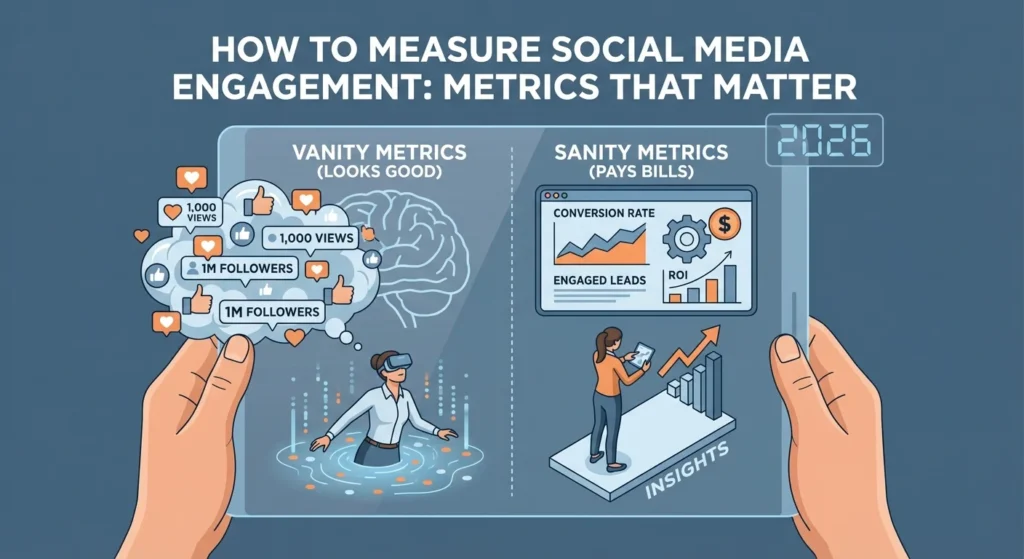
You posted a video. It got 1,000 views. Is that good?
Without context, it is just a number. If you have 100 followers, 1,000 views is viral success. If you have 1 million followers, 1,000 views is a catastrophe.
In 2026, most businesses are drowning in data but starving for insights. They track “Vanity Metrics” like likes and total follower counts because they look good on a report, but they often fail to track the “Sanity Metrics” that actually pay the bills.
This guide will strip away the noise. We will show you exactly how to measure social media engagement, calculate the formulas that matter, and use that data to refine your Winning Social Media Strategy.
Table of Contents
What is Social Media Engagement? (The Real Definition)
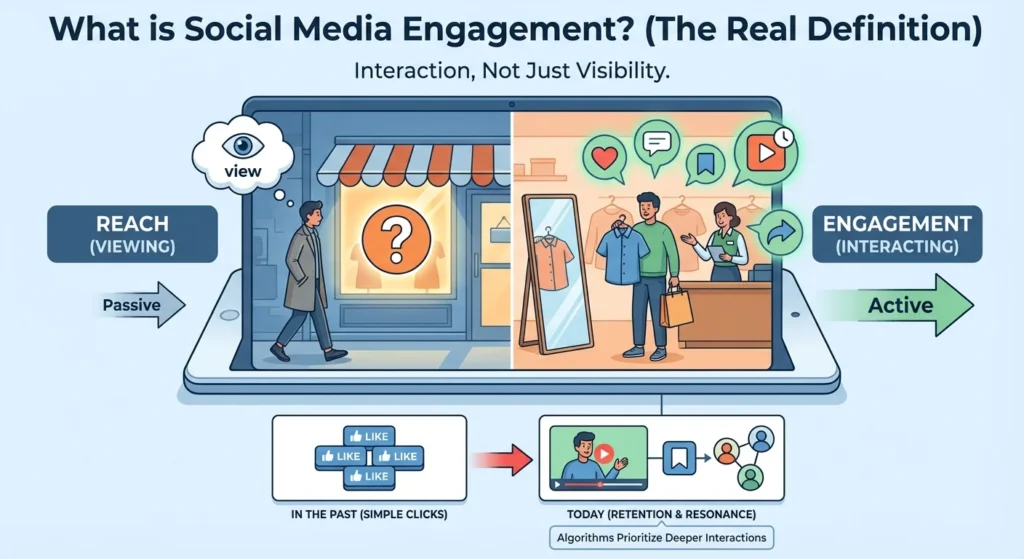
Social Media Engagement is not just about who sees your content; it is about who interacts with it.
Think of it this way: Reach is someone walking past your shop window. Engagement is someone coming inside to try on a shirt.
In the past, algorithms prioritized simple clicks like “Likes.” Today, they prioritize Retention and Resonance.
Platforms like TikTok and LinkedIn want to see that users are spending time on your content, saving it for later, and sharing it with friends. If you aren’t measuring these deeper interactions, you are flying blind.
The Hierarchy of Engagement: Which Metrics Matter?
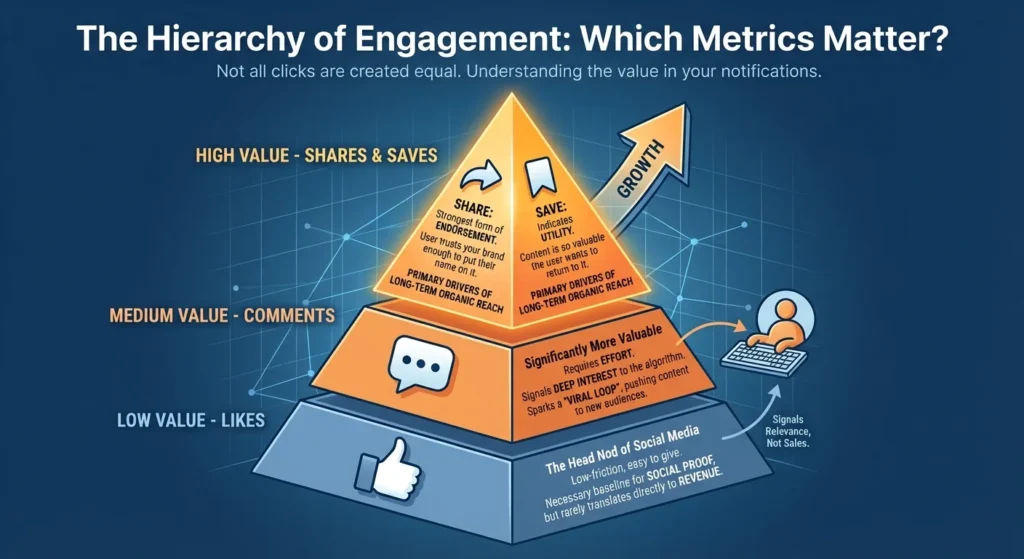
Not all clicks are created equal. To get a clear picture of your performance, you need to understand the hierarchy of value in your notifications.
At the bottom of the value chain are Likes. These are often called the “head nod” of social media. They are low-friction and easy to give, making them a necessary baseline for social proof, but they rarely translate directly to revenue. A lack of likes signals irrelevance, but a surplus doesn’t guarantee sales.
Moving up the ladder, we have Comments. A comment is significantly more valuable than a like because it requires effort. When a user takes the time to type a response, it signals deep interest to the algorithm. This interaction often sparks a “viral loop,” pushing your content to new audiences.
At the top of the hierarchy are Shares and Saves. A Share is the strongest form of endorsement; it means a user trusts your brand enough to put their name on it.
A Save, on the other hand, indicates utility. It tells the platform that your content was so valuable the user wants to return to it later. These two metrics are the primary drivers of long-term organic reach.
As noted by Forbes, ‘Shares’ act as social currency; when a user shares your content, they are effectively staking their own reputation on your brand’s value.
How to Calculate Engagement Rate (Without a Math Degree)
Total numbers lie. Percentages tell the truth. To accurately measure social media engagement, you need to normalize your data against your audience size.
Engagement Rate by Followers (ER)
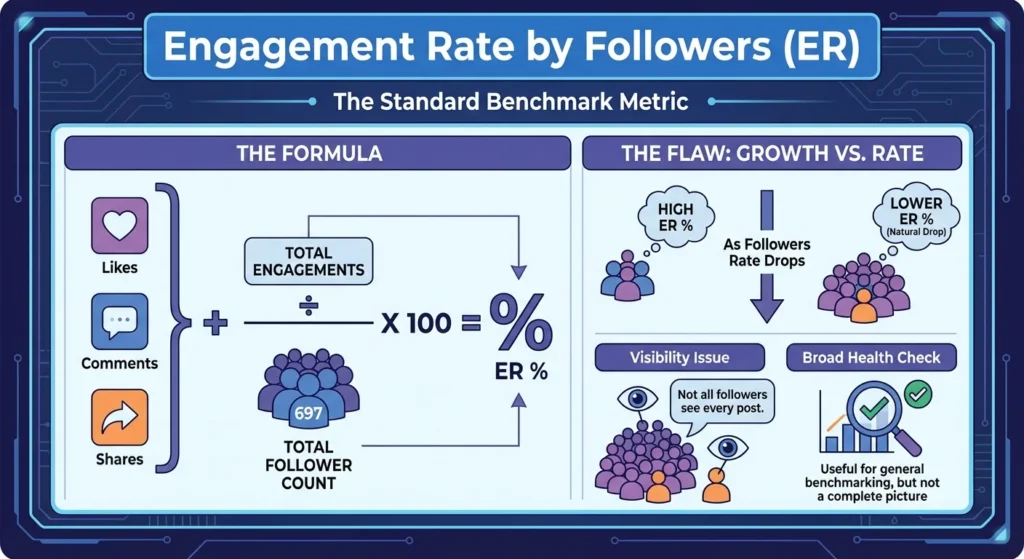
This is the standard metric used to benchmark yourself against competitors. You calculate it by adding up your total engagements (likes, comments, shares) and dividing that number by your total follower count. Then, multiply by 100 to get a percentage.
While useful for broad health checks, this metric has a flaw: as your follower count grows, your rate naturally drops because not all followers see every post.
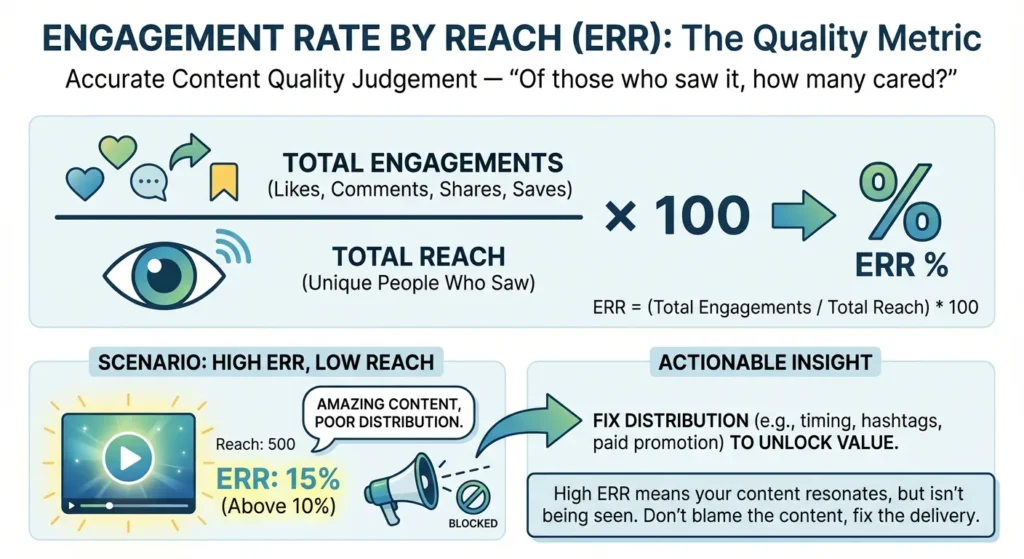
Engagement Rate by Reach (ERR)
This is the accurate metric for judging content quality. It answers the question: “Of the people who actually saw this post, how many cared?”
If your Reach is low but your ERR is high (e.g., above 10%), it means your content is amazing, but your distribution is broken.
Looking For Google Reviews? Claim your Discount Below
 8,492 people used this service in the past 7 days

The Hidden Metrics: What Most Brands Miss
Beyond the public-facing numbers, there are silent metrics that often determine your fate.
The first is Click-Through Rate (CTR). Engagement on the platform is nice, but are users actually moving to your website? If a post has 1,000 likes but only 2 clicks, your “Call to Action” is likely weak.
You should also track Profile Visits. This measures how many people saw your post and were curious enough to click your name and check out your bio. This metric acts as the bridge between a casual viewer and a loyal follower.
Finally, do not ignore Negative Feedback. Check your insights for “Hide Post” or “Unfollow” actions. If a specific topic consistently causes a spike in unfollows, your audience is telling you exactly what they hate.
Data from Hootsuite suggests that negative feedback metrics, such as ‘Hide Post’ or ‘Report Spam,’ are heavily weighted by algorithms and can severely punish your future reach if ignored.
Interpreting the Data: Troubleshooting Your Strategy
Data is useless without action. Once you have the numbers, you need to diagnose the problem.
If you have High Reach but Low Engagement, your content is likely the issue. People are seeing your posts, but they are scrolling past. This usually means your visuals are uninspiring or your “Hook” isn’t grabbing attention in the first three seconds.
Conversely, if you see Low Reach but High Engagement, your content is excellent, but your visibility is capped. The algorithm hasn’t categorized you as an “authority” yet. This is where a strategic push helps.
Using Social Media Growth services can boost your baseline visibility, ensuring your high-quality content actually gets the audience it deserves.
Conclusion.
Measuring social media engagement is not about judging yourself; it is about learning.
If you don’t track the numbers, you are just guessing. By monitoring your Engagement Rate by Reach, prioritizing high-value interactions like Shares, and reacting to what the data tells you, you turn your social media from a cost center into a revenue generator.
Stop guessing. Start measuring.
(Need to jumpstart those metrics? Check out our guide on 10 Proven Social Media Growth Strategies to get the ball rolling).
Frequently Asked Questions (FAQ)
What is meant by social engagement?
Social engagement is the measurement of public interaction with your brand. It moves beyond passive consumption (viewing) to active participation (liking, commenting, sharing, and clicking). It is the primary indicator that your content is resonating with real humans.
What are the 4 steps of social engagement?
The classic “Engagement Ladder” consists of Consumption (viewing), Curation (liking/saving), Creation (commenting/remixing), and Collaboration (sharing).
What drives social media engagement?
Engagement is driven by Emotion, Relevance, and Reciprocity. Content that makes people feel something (joy, anger, surprise) gets engagement.
Additionally, brands that reply to comments (reciprocity) get significantly more interaction than those that don’t.
What keeps people engaged on social media?
Community and Consistency. People stay engaged because they feel part of a tribe. If you post consistently and treat your comments section like a community chat rather than a billboard, users will return daily.