How to Perform a Social Media Competitor Analysis (Free Template)
It is frustrating to post content that you spent hours creating, only to see it get very little engagement. Meanwhile, your biggest competitor posts something simple and gets hundreds of likes and comments.
You might wonder if they know something you don’t. The answer is usually yes.
They have likely figured out exactly what your shared audience wants to see. The good news is that this information is public. You do not need to guess what works. You can find out by looking at the data your competitors leave behind every day.
By the end of this guide, you will learn exactly how to perform a social media competitor analysis, track your rivals, spot their weaknesses, and use that information to build a winning social media strategy from scratch.
Table of Contents
What is Social Media Competitor Analysis?
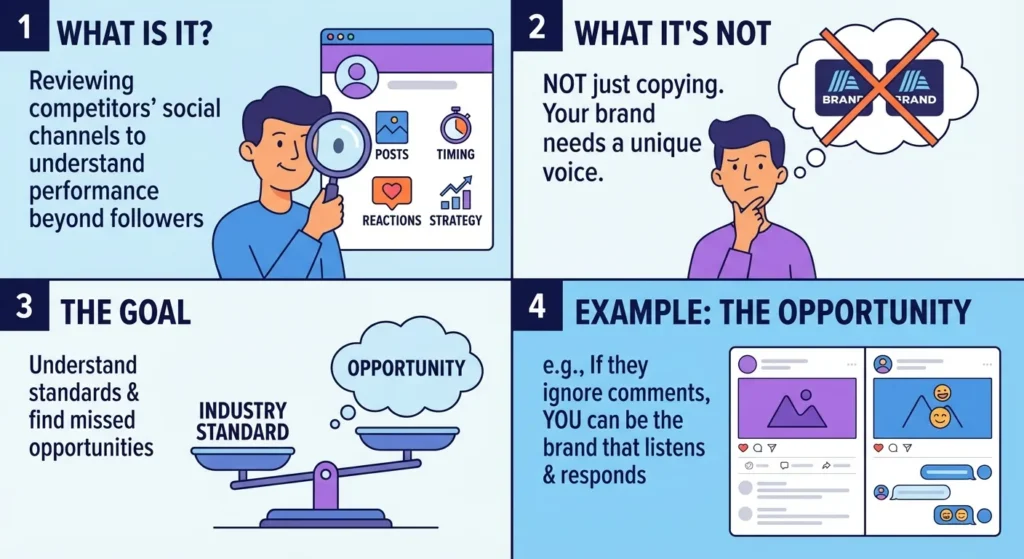
Social media competitor analysis is the process of reviewing your competitors’ social media channels to understand their performance.
It involves more than just looking at their follower count. You have to look at what they post, when they post it, how their audience reacts, and what their overall strategy seems to be.
The goal is not to copy them. Copying is a bad strategy because your brand voice needs to be unique. Instead, the goal is to see what the standard is in your industry and find opportunities they are missing.
For example, if you notice your competitor never replies to comments on Instagram, that is an opportunity for you. You can win over that audience by being the brand that actually listens and responds.
Why You Need to Analyze Your Digital Rivals
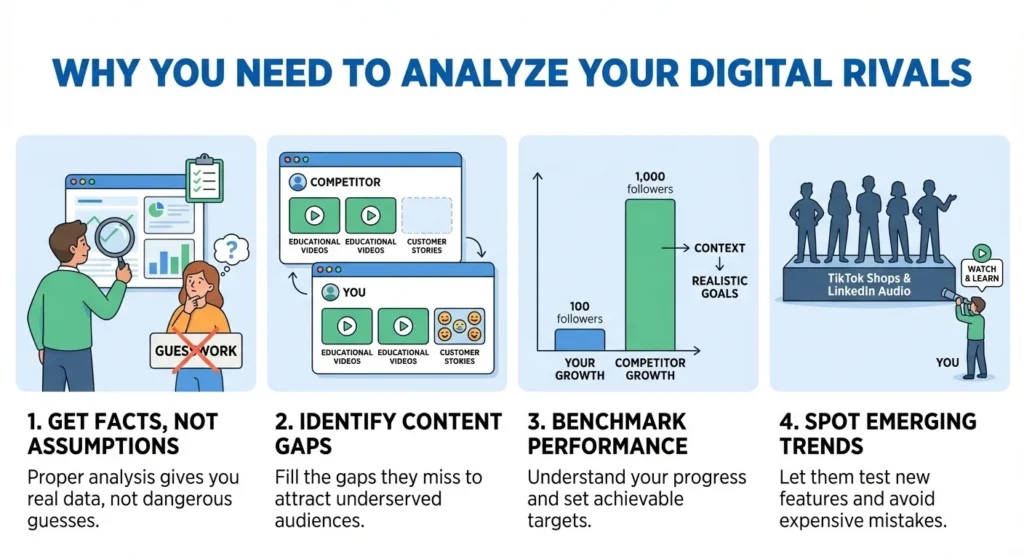
Many businesses skip this step because they think they already know who their competitors are. But relying on assumptions is dangerous in marketing. A proper analysis gives you facts.
Identify Content Gaps
Your competitors cannot cover everything. They might be great at posting educational videos but terrible at sharing customer success stories.
When you spot these gaps, you can fill them. This helps you attract the part of the audience that is currently underserved.
Benchmark Your Performance
It is hard to know if your growth is good or bad without context. Is gaining 100 new followers a month a success? If your competitor is gaining 1,000 a month, you have work to do.
If they are losing followers, you are doing well. Benchmarking helps you set realistic goals based on social media growth strategies that are actually working in your specific niche.
Spot Emerging Trends
Competitors with larger budgets often test new features first. If you see five major players in your industry starting to use TikTok Shops or LinkedIn Audio events, that is a strong signal that you should investigate those channels too. You can let them make the expensive mistakes while you watch and learn what works.
Step 1: Identify Your True Social Media Competitors
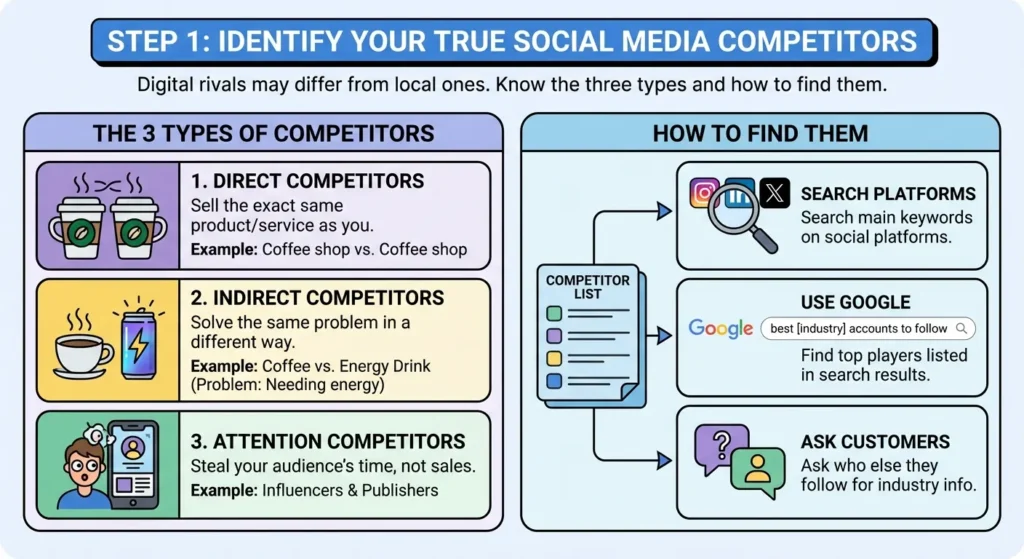
Before you can analyze them, you need to know who they are. In the digital world, your competitors might be different from your local business rivals.
You generally have three types of competitors on social media:
- Direct Competitors: These are businesses that sell the exact same product or service as you. If you sell coffee, this is the other coffee shop down the street.
- Indirect Competitors: These businesses solve the same problem as you but in a different way. If you sell coffee, an energy drink brand is an indirect competitor because you both solve the problem of “needing energy.”
- Attention Competitors: These are accounts that do not sell anything similar to you, but they steal your audience’s time. In the social media space, influencers and publishers are often your biggest competition for attention.
How to Find Them
Start by searching your main keywords on platforms like Instagram, LinkedIn, and X (formerly Twitter). Look at the top accounts that appear in the search results.
You can also use Google. Search for “best [your industry] accounts to follow.” The results will often list the top players in your space.
Another simple method is to ask your current customers. Ask them who else they follow for information related to your industry. Their answers might surprise you and reveal competitors you didn’t know existed.
Step 2: Gather Data (What to Track)
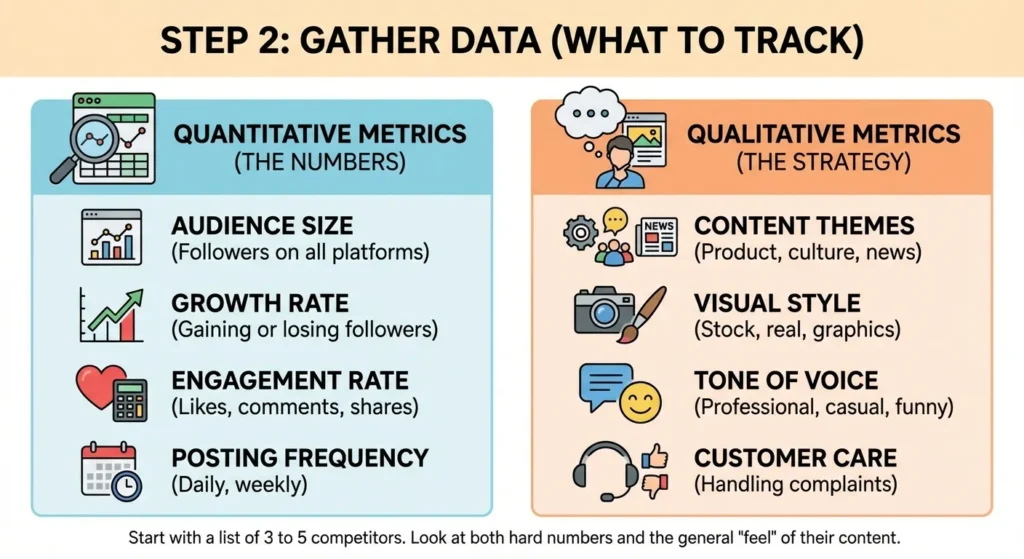
Once you have a list of 3 to 5 competitors, you need to start collecting data. You should look at both hard numbers and the general “feel” of their content.
Quantitative Metrics (The Numbers)
These are the measurable facts. Start by tracking their Audience Size to see how many followers they have across all platforms.
Next, look at their Growth Rate to determine if they are gaining or losing followers; usually, a sudden spike means they ran a successful campaign or a giveaway.
You should also calculate their Engagement Rate, which is often more important than follower count because high engagement means their audience truly cares about what they say.
Finally, note their Posting Frequency to understand if they are posting once a day or just once a week.
Qualitative Metrics (The Strategy)
These metrics require you to read and watch their content to understand the strategy behind it. Start by identifying their Content Themes to see if they are talking about product features, company culture, or industry news.
Next, observe their Visual Style to see if they use stock photos, real team photos, or heavy graphics, and pay attention to their Tone of Voice to determine if they sound professional and corporate or casual and funny.
Looking For Google Reviews? Claim your Discount Below
 8,492 people used this service in the past 7 days

Finally, look at Customer Care to see how they handle complaints. Do they ignore them, or do they resolve them publicly? This is often where you can find a competitive advantage.
If their reputation is suffering due to poor service, you might look into how you can highlight your own trust and reliability, perhaps by showcasing how you buy Google reviews management services or organic testimonials to build social proof.
Step 3: Platform-Specific Analysis
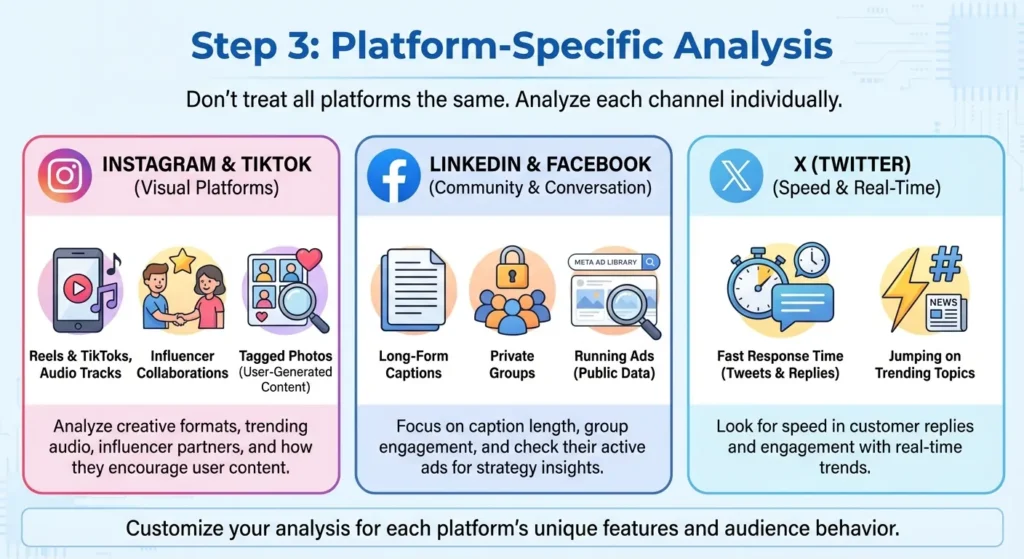
You cannot treat all platforms the same. A competitor might be terrible on Facebook but amazing on TikTok. You need to look at each channel individually.
Analyzing Instagram and TikTok
On these visual platforms, look at their creative formats.
- Are they using Reels and TikToks primarily?
- What audio tracks are they using?
- Do they collaborate with influencers?
- Check their “Tagged” photos. This shows you how real customers are posting about them. User-generated content is a huge driver of social media growth, so if they have a lot of it, analyze how they are encouraging it.
Analyzing LinkedIn and Facebook
- Look at the length of their captions. Long-form storytelling often works well here.
- Check if they use Groups. Private communities are a powerful retention tool.
- See if they are running ads. You can use the Meta Ad Library to see every active ad your competitor is running on Facebook and Instagram. This is public information and a goldmine for strategy.
Analyzing X (Twitter)
Here, speed matters.
- Look at their “Tweets & replies” tab.
- How fast do they respond to customer questions?
- Do they jump on trending news topics?
Step 4: SWOT Analysis (Turning Data into Strategy)
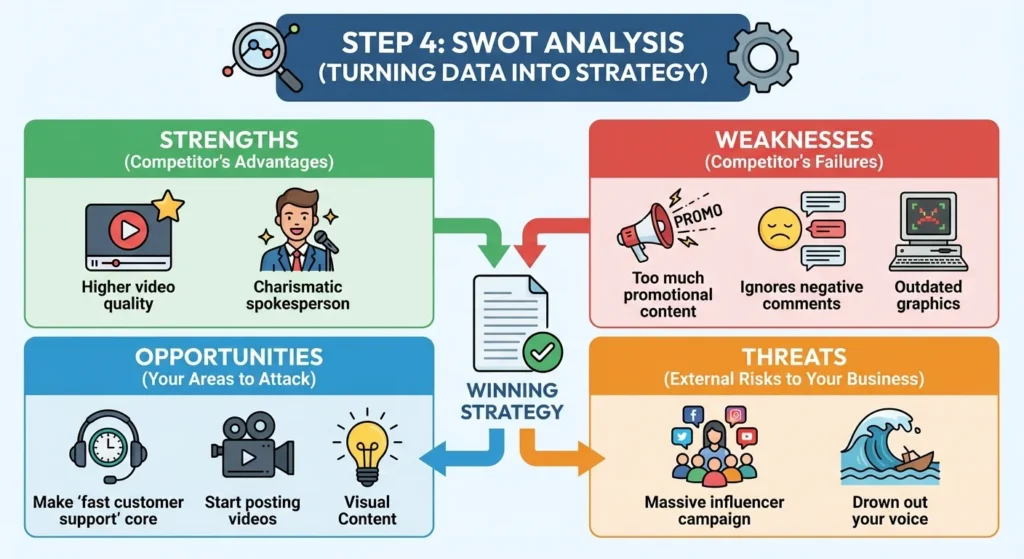
Collecting data is useless if you do not analyze it. The best way to organize your thoughts is a simple SWOT analysis.
Strengths
What is the competitor doing better than you? Be honest. Maybe their video quality is higher, or they have a very charismatic spokesperson. Acknowledge these strengths so you know what you are up against.
Weaknesses
Where are they failing? Maybe their graphics look outdated. Maybe they post too much promotional content and bore their audience. Maybe they ignore negative comments. These are the areas where you can attack.
Opportunities
Based on their weaknesses, what can you do differently? If they ignore negative comments, you can make “fast customer support” a core part of your brand message. If they only post text updates, you can start posting videos to capture the audience that prefers visual content.
Threats
What are they doing that could hurt your business? If a competitor starts a massive influencer campaign, that could drown out your voice. Identifying this threat early allows you to prepare a counter-strategy.
How to Use Our Free Competitor Analysis Template
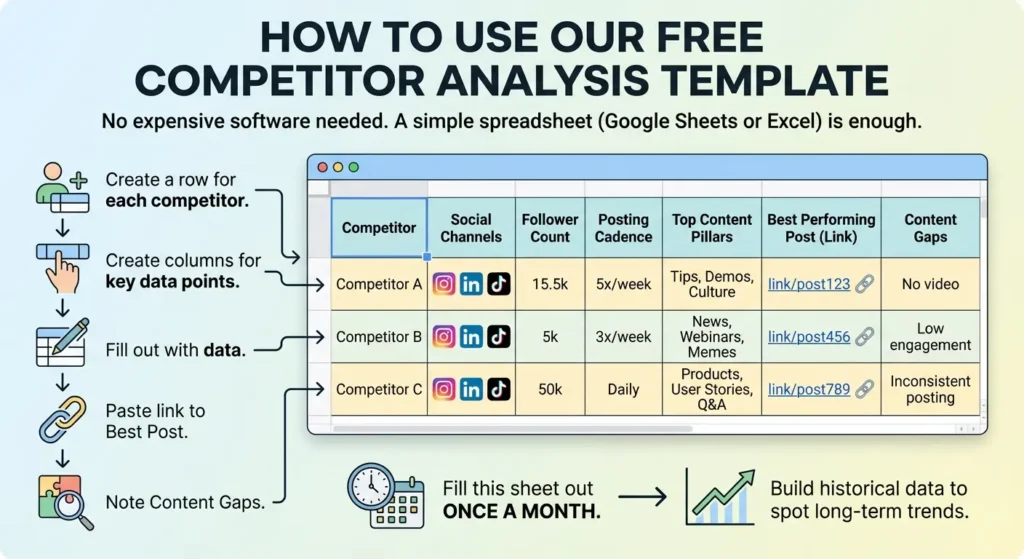
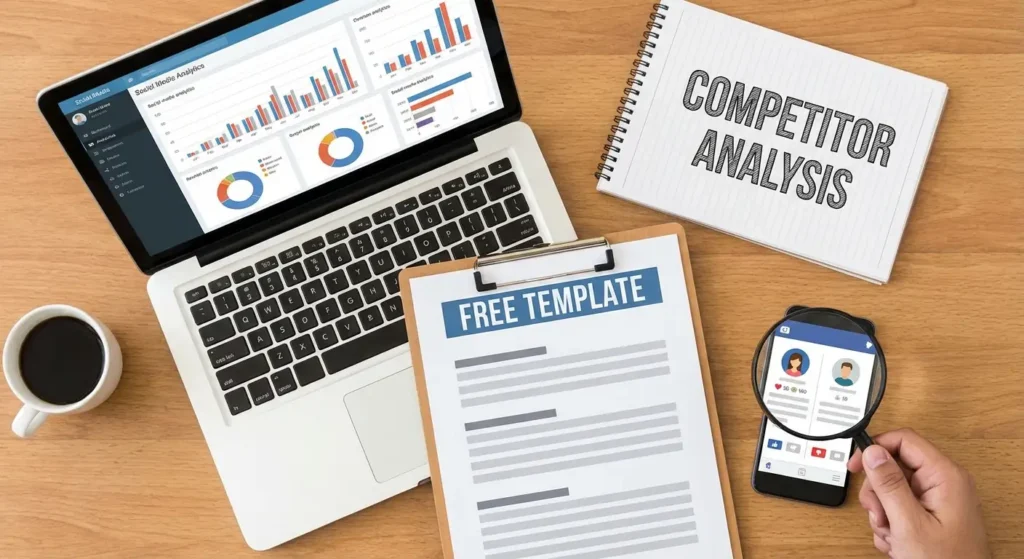
You do not need expensive software to do this. A simple spreadsheet is enough. You can create your own free template using Google Sheets or Excel.
Here is how to set it up. Create a row for each competitor. Then, create columns for the following data points:
- Social Channels: List which platforms they are active on.
- Follower Count: Note the current number.
- Posting Cadence: Note how many times per week they post.
- Top Content Pillars: Write down the 3 main topics they talk about (e.g., “Tips,” “Product Demos,” “Memes”).
- Best Performing Post: Paste a link to their most liked post from the last 30 days.
- Content Gaps: Write a note about what they are missing.
Fill this sheet out once a month. Over time, you will have a clear record of who is growing and why. This historical data is incredibly valuable for spotting long-term trends.
Top Tools to Speed Up Your Analysis
While you can do everything manually, some tools can save you time.
Google Alerts:.This is a free tool from Google. You can set it up to send you an email whenever your competitor’s name is mentioned on the web. It is a great way to catch press releases or major news articles about them.
Social Blade. This is a popular freemium tool that lets you check the growth history of accounts on YouTube, Instagram, and Twitter. It creates simple charts that show you if a competitor is gaining or losing followers day by day.
Meta Ad Library. As mentioned earlier, this is the official tool from Facebook. It is completely free and transparent. You can search for any brand and see exactly what ads they are paying for right now. This helps you understand their sales strategy, not just their content strategy.
Conclusion
Social media competitor analysis is not a one-time task. It is a cycle. The digital landscape changes fast. A strategy that worked six months ago might be useless today.
By regularly checking in on your competitors, you ensure that you never fall behind. You will stop guessing what content to create and start making decisions based on real data.
Start small. Pick your top three competitors today and look at their last ten posts. What worked? What didn’t? The answers to your growth problems are often hiding right there in their feed.
Frequently Asked Questions
How often should I conduct a social media competitor analysis?
Ideally, you should perform a deep audit once every quarter (every three months). This allows you to track larger trends. However, it is smart to do a quick check once a month just to see if they have launched any major new campaigns that you need to be aware of.
Can I analyze competitors who aren’t in my industry?
Yes, and you often should. These are called “aspirational competitors.” Analyzing successful brands outside your niche can give you great ideas. For example, a software company might learn a lot about visual storytelling by watching how a fashion brand uses Instagram.
Is there a legal way to see my competitors’ ad strategies?
Yes. The Meta Ad Library is a fully legal and public tool provided by Facebook. It allows anyone to view active ad campaigns. It was created to increase transparency in advertising, and it is perfectly ethical for you to use it for research.
What is the most important metric to track?
While follower count looks impressive, Engagement Rate is usually the most critical metric. It tells you if people actually care about the brand. A smaller account with high engagement is often more of a threat than a huge account with zero engagement.